Binary Search Tree (BST) and Balanced Trees
[ Last Updated: 2024-05-15 ]
Properties
A Binary Search Tree is a tree-based data structure that satisfies the following properties:
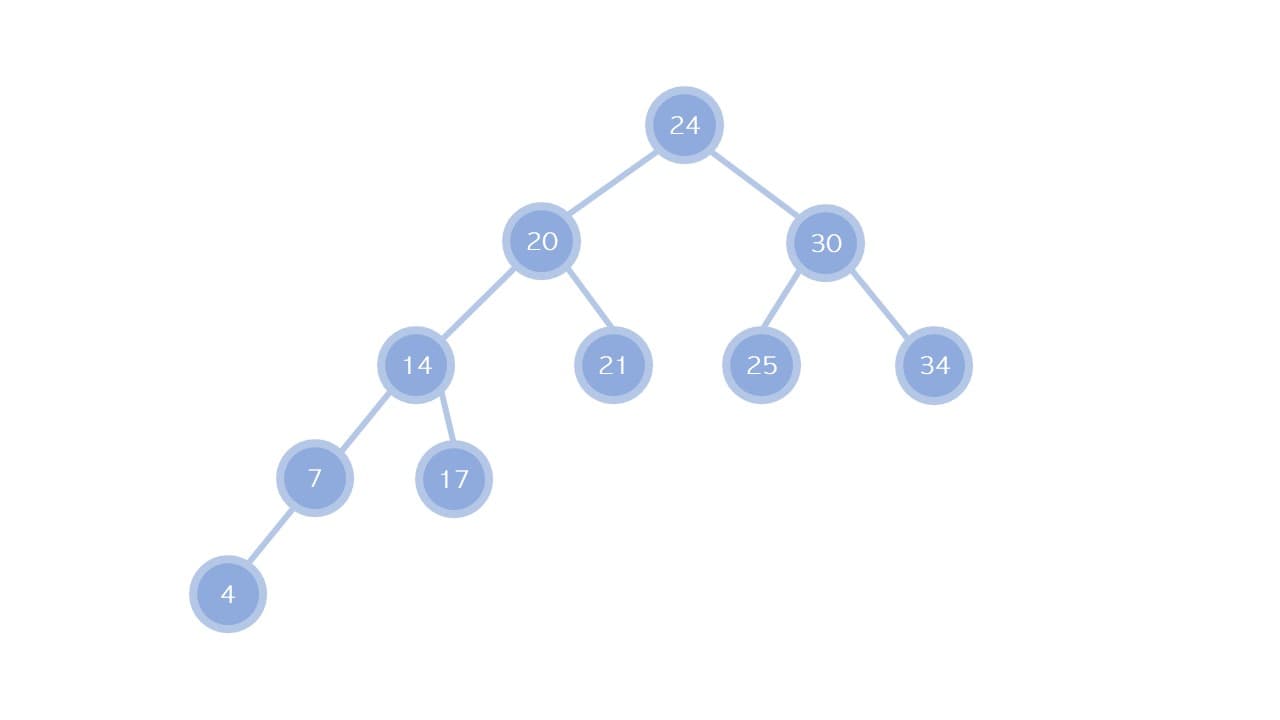
- If the left subtree is not empty, the values of all nodes in the left subtree are less than the value of the root node.
- If the right subtree is not empty, the values of all nodes in the right subtree are greater than the value of the root node.
- The left and right subtrees must also be binary search trees.
A BST maintains an ordered dynamic set. A balanced BST can maintain the time complexity of basic operations like insertion and deletion at , which is significantly more efficient than a standard linear queue.
Basic Operations
Find Maximum / Minimum Continuously follow the left child pointers until a node has no left child (for minimum) or follow right child pointers until a node has no right child (for maximum).
Find Predecessor / Successor
- Predecessor: If the left subtree is not empty, return the maximum value (rightmost node) in the left subtree. If empty, move up to the first ancestor where the path goes from a left child to its parent.
- Successor: Vice versa.
In-order Traversal
- If the left subtree is not empty, recursively call the traversal on the left subtree.
- Print the root node value.
- If the right subtree is not empty, recursively call the traversal on the right subtree.
Search / Delete a node with value k
- Search: Compare with the root. If , go left; if , go right.
- Delete:
- If it is a leaf node, delete it directly.
- If it has only one child, the child replaces the deleted node's position.
- If it has two children, find the predecessor (max value in left subtree), swap its value with , then delete the node at the new position.
Find the i-th node
Using size(root) to record the number of nodes in a subtree:
- Let .
- If , return current node.
- If , search in the left subtree.
- If , search in the right subtree looking for the -th node.
Balanced Trees
As mentioned, a balanced BST has a complexity of . However, if the tree is unbalanced (e.g., one side is much taller than the other) or degenerates into a linked list, the efficiency of the BST is lost. To ensure the height stays around , we must maintain the tree's balance.
Examples of Implementations:
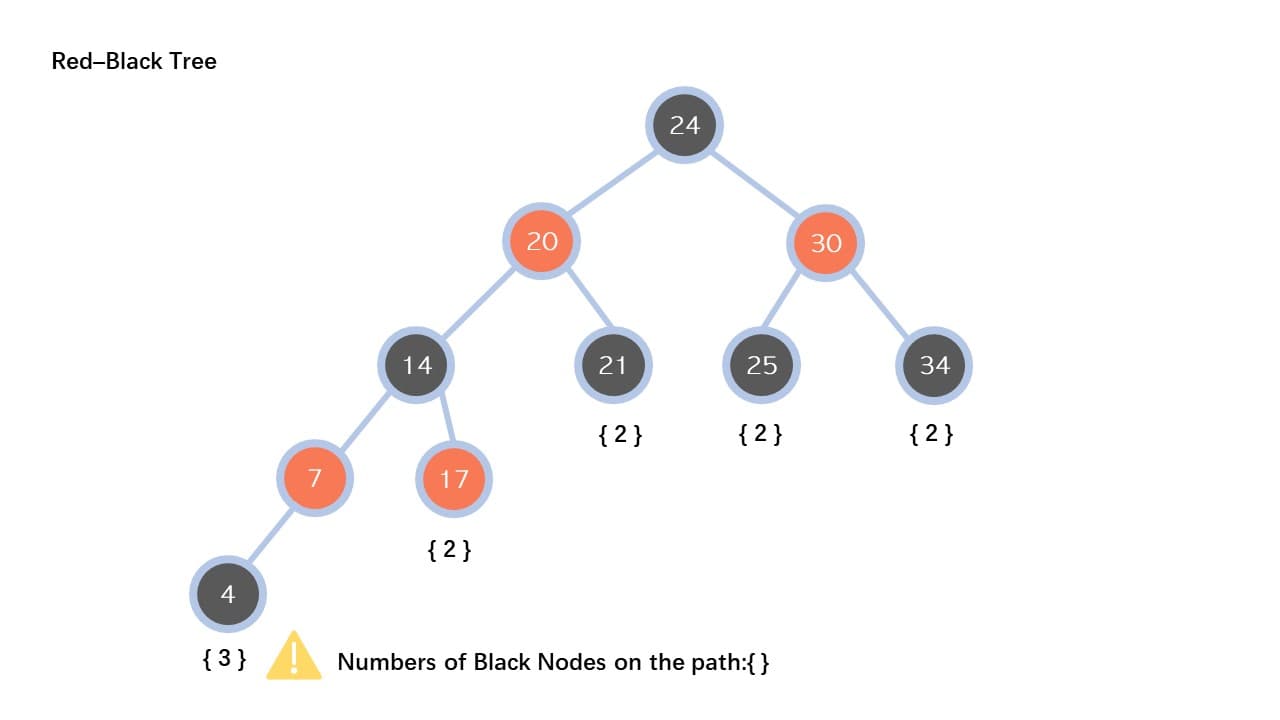
1. Red-Black Tree
Properties:
- Every node is either Red or Black.
- The root is always Black.
- Red nodes cannot have Red children (no two Reds in a row).
- Every path from a node to its descendant NULL nodes must contain the same number of Black nodes.
Proof: A Red-Black tree with nodes has a height no greater than . Since every path has the same number of Black nodes and Red nodes cannot be adjacent, the longest path (alternating Red/Black) is at most twice as long as the shortest path (all Black).
2. AVL Tree
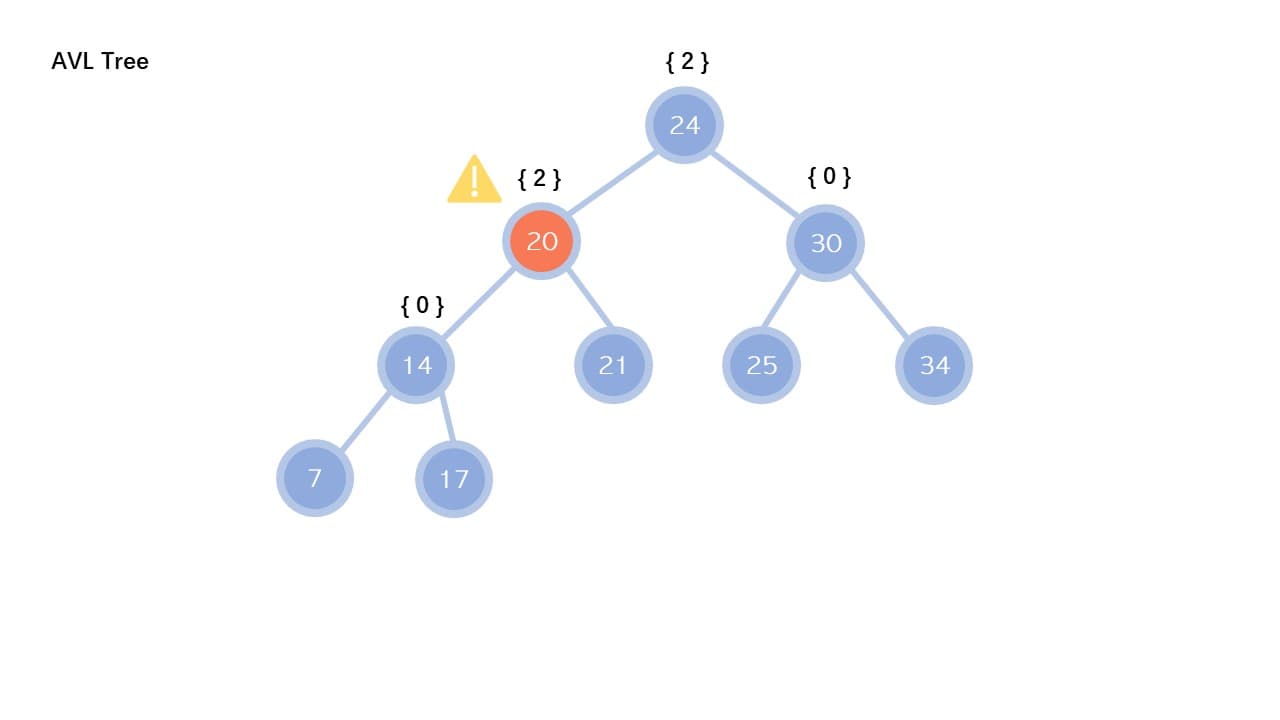
Introduces a Balance Factor (height of left subtree - height of right subtree). For a tree to be balanced, this factor must be between -1, 0, or 1. If it exceeds this range, "rotations" are required.
3. Scapegoat Tree
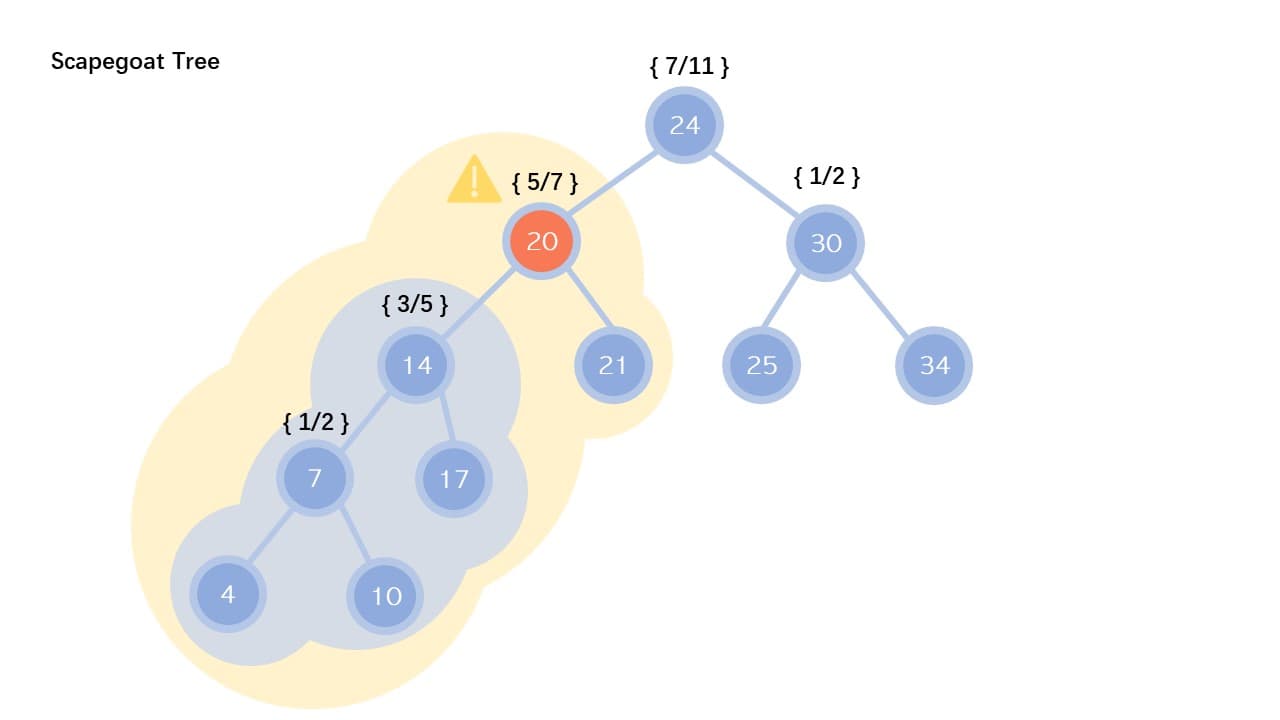
Uses a balance coefficient (typically around 0.7). If a subtree's size relative to its parent exceeds , the subtree is "scapegoated" and completely rebuilt into a perfectly balanced tree.
4. Treap (Tree + Heap)
Assigns a random priority to each node. It maintains the BST property for the key and the Heap property for the priority (usually using rotations).
Note: Different algorithms have different definitions of "balanced." A tree might be unbalanced in AVL but perfectly acceptable in a Scapegoat tree.
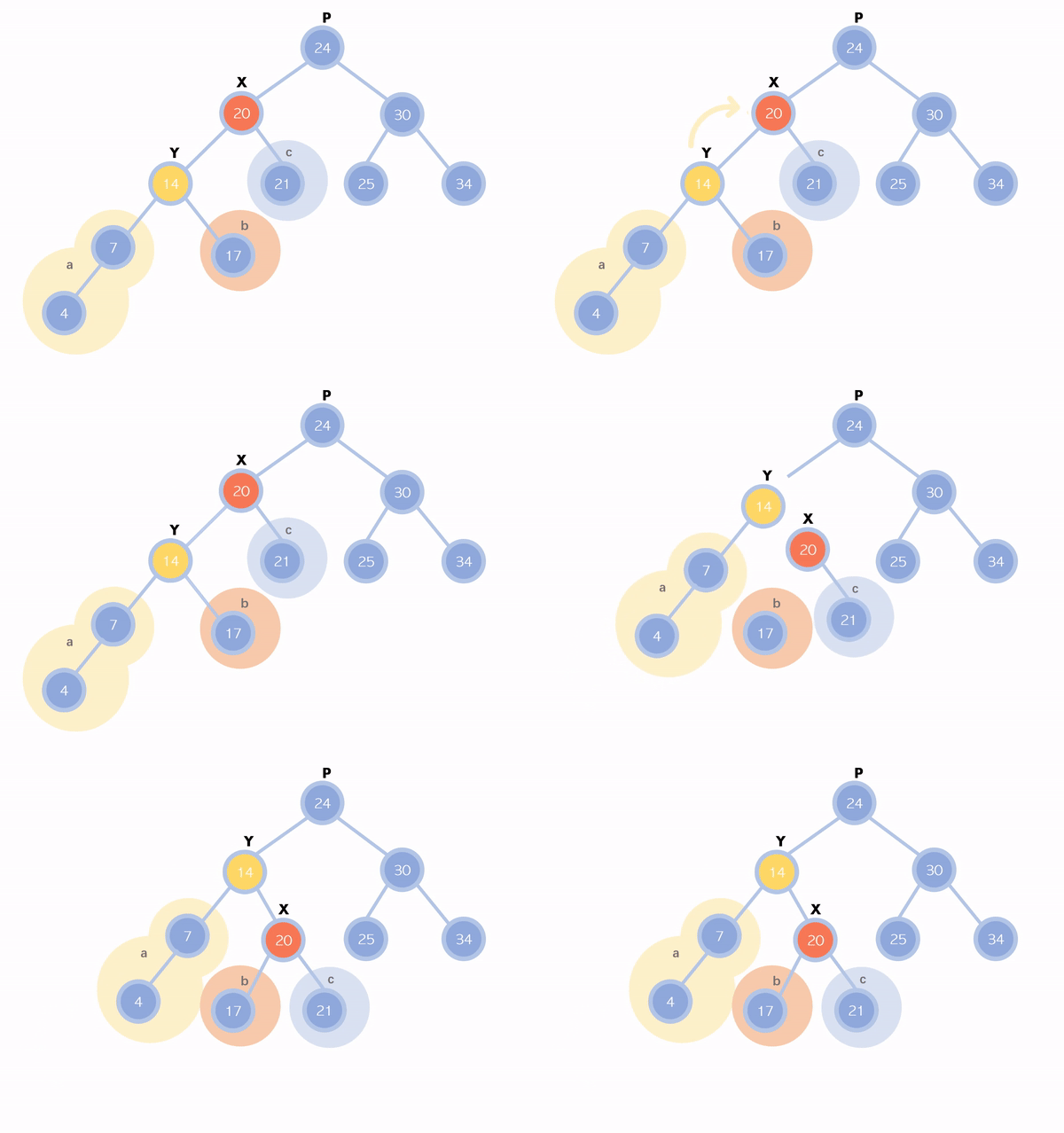
Rebalancing: Rotations
Rotations take time.
Left Rotation (x - y): becomes the parent of . takes 's left child as its new right child.
Right Rotation (x - y): becomes the parent of . takes 's right child as its new left child.
Implementation: BST via AVL Tree
I implemented the insert logic for an AVL tree. The delete logic is omitted for brevity.
class TreeNode:
    def __init__(self, key):
       self.key = key
       self.left = None
       self.right = None
       self.height = 1

class AVLBST:
    def __init__(self):
        self.root = None

    def search(self, key):
        return self.searching(self.root, key)

    def searching(self, currentroot, key):
        if not currentroot: return False
        if currentroot.key == key:
            return True
        if key < currentroot.key:
            return self.searching(currentroot.left, key)
        return self.searching(currentroot.right, key)

    def getheight(self, root):
        if root is None:
            return 0
        return root.height

    def avlfactor(self, root):
        if root is None:
            return 0
        return self.getheight(root.left) - self.getheight(root.right)

    def insert(self, key):
        self.root = self.inserting(self.root, key)

    def inserting(self, currentroot, key):
        if currentroot is None:
            return TreeNode(key)
        if key < currentroot.key:
            currentroot.left = self.inserting(currentroot.left, key)
        else:
            currentroot.right = self.inserting(currentroot.right, key)

        currentroot.height = 1 + max(self.getheight(currentroot.left), self.getheight(currentroot.right))

        balance = self.avlfactor(currentroot)

        # Left Left Case
        if balance > 1 and key < currentroot.left.key:
            return self.rightrotate(currentroot)

        # Right Right Case
        if balance < -1 and key > currentroot.right.key:
            return self.leftrotate(currentroot)

        # Left Right Case
        if balance > 1 and key > currentroot.left.key:
            currentroot.left = self.leftrotate(currentroot.left)
            return self.rightrotate(currentroot)

        # Right Left Case
        if balance < -1 and key < currentroot.right.key:
            currentroot.right = self.rightrotate(currentroot.right)
            return self.leftrotate(currentroot)

        return currentroot

    def leftrotate(self, x):
        y = x.right
        T2 = y.left
        y.left = x
        x.right = T2
        x.height = 1 + max(self.getheight(x.left), self.getheight(x.right))
        y.height = 1 + max(self.getheight(y.left), self.getheight(y.right))
        return y

    def rightrotate(self, x):
        y = x.left
        T2 = y.right
        y.right = x
        x.left = T2
        x.height = 1 + max(self.getheight(x.left), self.getheight(x.right))
        y.height = 1 + max(self.getheight(y.left), self.getheight(y.right))
        return y

    def treeprint(self):
        self.subtreeprint(self.root)

    def subtreeprint(self, currentroot):
        if currentroot:
          print("(", end="")
          self.subtreeprint(currentroot.left)
          print(currentroot.key, end="")
          self.subtreeprint(currentroot.right)
          print(")", end="")

# Testing
MyTree = AVLBST()
for val in [10, 20, 30, 40, 50, 60, 70]:
    MyTree.insert(val)

MyTree.treeprint()
x = int(input("\nEnter key to search: "))
if MyTree.search(x):
    print(str(x) + " is in the Tree")
else:
    print(str(x) + " is not in the Tree")
-Untitled Penguin 2024/5/12